
From the battlefield to the couch: the little-known history of the Malinois!
Woof, everyone, it's Sanji!
When my owner told me we were going to talk about the Malinois, I immediately thought of police dogs.
You know, the ones that look like they could find a single kibble lost in the middle of an entire forest.
I thought I knew their story.
But in reality, I hadn’t seen anything yet.
Because long before working with the police, customs, or rescue teams, Malinois played a part in one of the most difficult periods in our history: World War I.
And believe me, they didn’t just stand by and watch from afar.
Soldiers Like No Others
By the end of the 19th century, wars were becoming increasingly deadly.
Battlefields stretched for kilometers. The wounded were sometimes stranded in the dark, unable to call for help. Some even found themselves buried or hidden to avoid being spotted by the enemy.
Imagine for a moment.
It’s nighttime. The sounds of battle still echo.
And somewhere, a wounded soldier waits to be found.
That’s where dogs come in.
Thanks to their exceptional sense of smell, they’re able to locate men where humans struggle to find them. The German army was among the first to develop the large-scale use of medical dogs before World War I.
Their mission is simple:
to find the wounded before it’s too late.
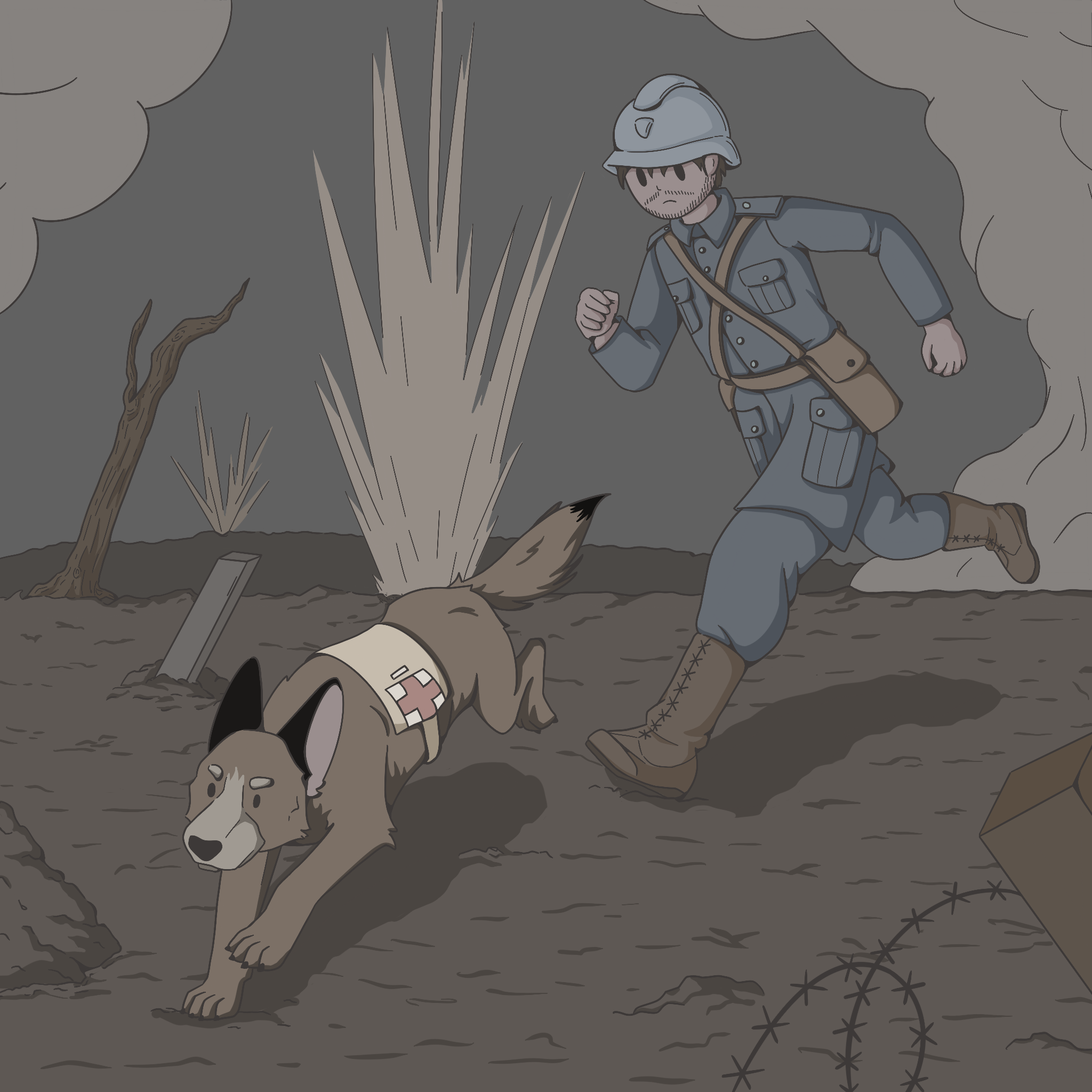
When a dog discovers a soldier on the ground, it retrieves an item belonging to him (a glove, a handkerchief, or a piece of clothing) and then returns to alert its handler before guiding him to the wounded soldier.
Honestly?
When I’m under the couch with my ball, I just wait for my owner to come get me.
And then the Malinois arrived
- While other dogs were being trained for medical missions, one breed was already beginning to make a name for itself in Belgium: the Malinois.
In fact, as early as the late 19th century, Belgian shepherd dogs, including the Malinois, began to be used by police forces.
It must be said that the Malinois possesses everything one looks for in a working dog: intelligence, endurance, and above all, a motivation that sometimes seems never-ending.
When World War I broke out, several dog breeds were mobilized by European armies.
Among those employed by the Belgian army, the Malinois quickly stood out for its versatility.
It became a true four-legged Swiss Army knife.
Depending on the need, it carried messages, accompanied Red Cross medical teams, supplied certain positions, or carried out protection and transport missions.
At a time when radios were rare and telephone lines were regularly destroyed, transmitting information quickly could save lives.
Malinois dogs prove to be particularly effective in this type of mission.
- No GPS.
- No phone.
- No chat group called “Trench Emergency.”
Just them, their mission, and their incredible determination.
When Dogs Become Soldiers
At the start of the conflict, many dogs were used to locate the wounded.
But the war was changing rapidly.
Beginning in the fall of 1914, the conflict gradually became bogged down in trench warfare, and the needs of the troops changed.
In August 1915, the War Department requested that medical dogs be transformed into full-fledged war dogs.
Rescue missions gradually took a back seat.
Dogs now guarded positions, carried supplies, delivered messages and alerted soldiers when danger approached.
They lived under the same conditions as the men, enduring the cold, rain, mud, and daily bombardments.
They were also exposed to chemical attacks.
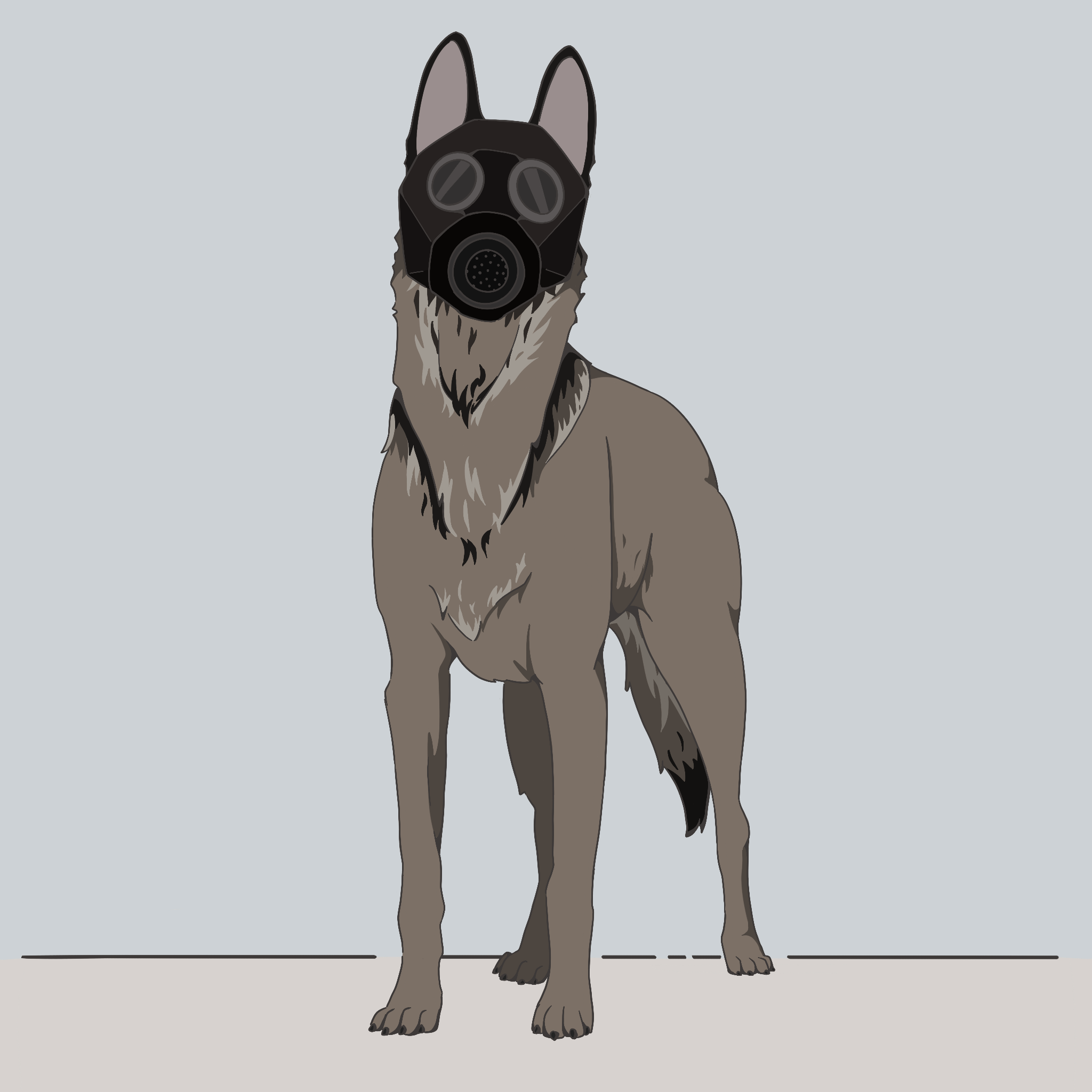
Some even wore gas masks specially designed for them. Yes. Gas masks.
I already refuse to wear certain coats when it rains, so I have to admit that these dogs were made of particularly tough stuff.
Energy that spans generations
The more I delved into my research, the more one thing became clear.
Today’s Malinois haven’t really changed that much after all.
They still possess that same boundless energy and constant drive to be active.
In fact, this drive is sometimes so strong that they can injure themselves while playing simply because they refuse to slow down. For them, the concept of taking a break often seems optional.
This energy explains why we still find the Malinois today in a wide variety of fields: obedience, tracking, scent detection, search and rescue.
But behind all these tasks lies the same thing: a dog that loves to work with humans.
From the battlefield to the couch
Despite this impressive history, the Malinois isn’t just a working dog.
Today, it’s also a family companion.
Of course, its energy often requires a significant investment of time and effort from its humans. It’s probably not the kind of dog that will spend its entire day napping between two cushions.
But behind the working dog lies a loyal companion, close to his family and always ready to take part in everyday activities.
I find that quite beautiful.
Because deep down, whether in a trench a hundred years ago or in a home today, what seems to define the Malinois hasn’t really changed:
his willingness to be there when you need him.
To conclude
When we began researching this column, I thought I’d be uncovering the story of a military dog. I ended up discovering much more than that.
I discovered dogs that tracked down the wounded in the dark, carried messages in the midst of battle, and stood by humans during some of the most difficult moments in their history.
So the next time you come across a Malinois, you might just see an energetic dog.
But behind it lies the legacy of generations of dogs that have accomplished extraordinary things, despite the conditions and the trauma that may have resulted.
That's no small thing.
Then again, if you know one personally, there’s also a good chance he’s running around with a stick that’s way too big for him.
And that’s just fine, too.
See you soon for another post,
Woof and Kisses
Sanji 🐾
Be sure to subscribe to our newsletter
“ Canine Chronicles " to learn more about upcoming articles: Canine Chronicles